Mia Hansen-Løve — An Appreciation

Is it a French thing? How is it possible for movies to be emotional without ever straying into sentimentality, both philosophical and powerfully vulnerable, essentially hopeful in matters of the heart without sacrificing unflinching realism?

This is the tightrope that Mia Hansen-Løve walks in the three films leaving the Criterion Channel in January. I hurried to watch all three in the waning days of the month, and found myself increasingly absorbed by Hansen-Løve’s universe. As I watched the films, in no particular order, each in turn became my favorite until, as I finished “Goodbye, First Love” (2011), the total effect was palpable absorption into Hansen-Løve’s approach to filmmaking.

Thematically, “Goodbye, First Love,” “Things to Come” (2016), and “Father of My Children” (2009) share an interest in the struggles of couples, tested or enlarged by the introduction of a third person. And, while serene love may be the ideal, it is, realistically, largely absent. Hansen-Løve explores most acutely the ways coupling can go wrong.

In each, the main setting is Paris, with occasional forays into the countryside for reflection, as though certain kinds of emotional developments demand a pastoral setting. Hansen-Løve’s characters are old and young, rich and not.

Class struggle is an underlying theme, but it is not a large one, and seems to exist more to ground and prove the characters than as part of some political agenda.

In “Things …,” Isabelle Hubert’s character Nathalie, an aging Philosophy professor, is confronted by a politically-involved former student Fabien (Roman Kolinka). “You don’t let everyday behavior betray your values,” he says, suggesting that her “bourgeois lifestyle” makes her a hypocrite. Nathalie retorts, “Why not outgrow these schemes? I think they’re sterile. Revolution is not my goal. It’s true. To help kids think for themselves.”

The issue for Hansen-Løve seems to be not whether one lives a life consonant with theoretical political belief, but whether one lives a life that satisfies the demands of ones own sense of self. The quest is internal.

For Nathalie, the compensation for loss of husband to another woman and her mother to death is freedom, most importantly freedom of the mind. Shortly after her encounter with Fabien, she reads her class a quote from Rousseau:

So long as we desire, we can do without happiness. We expect to achieve it. If happiness fails to come, hope persists. And illusion’s charm lasts as long as the passion causing it. Thus, this condition suffices to itself, and the anxiety it inflicts is a pleasure which supplants reality, perhaps bettering it. Woe to him who has nothing to desire! He loses everything he owns. We enjoy less what we obtain than what we desire, and are happy only before becoming so.

Nathalie continues: “This is the power of imagination. It compensates for the absence of the loved one with a pleasure that is purely mental, unreal in a way, yet nevertheless effective. For people with a lot of imagination, like Julie but probably Rousseau as well, phantasmagorical satisfaction is a real comfort that supplants, replaces carnal pleasure.”

The importance of individual responsibility and self-definition undergird the emotions at play in these three films. The morality involved in choosing well extends not only to romantic love, but to the family and to the choice of vocation. Divorce and death may challenge us, but, if thoughtfully structured, we can persist with purpose.

As Lorenz ruminates to Camille, “Life is never what you expect. Your fantasy-version of the world is doomed to failure. It’s up to you to create one that’s deeper, more real. That’s how you become yourself.”

In pursuit of purpose, fidelity to ones own guiding light is primary; infidelity to another may be necessary to fully understand oneself and, in Hansen-Løve’s universe, is less a stressor than a signal.

In “Things …,” when Nathalie’s husband tells her he has met someone else, her strongest feeling seems to be not hurt, but displeasure that he should make her aware of this other person. In “Goodbye…,” Camille (played by Lola Creton), tempted to return to Sullivan (Sebastian Urzendowsky) after a long separation, tests her resurgent feelings by sleeping with him again, hiding this new affair from her then husband, the older Lorenz (Magne Håvard-Brekke).

Because of this unfaithfulness, Sullivan himself chastises her as no longer “pure,” but in the French universe of Hansen-Løve, honesty with oneself is the ultimate good, and this exploration is what Camille requires in order to understand her ultimate choice.

The Future

Rarely does one find a film that seamlessly weaves laugh out loud humor, sly meta- elements and heartfelt emotion into one production. This is one such film.

Miranda July, the director as well as one of the leads, is apparently a creative inferno. She directs, acts, writes (a novel, and two collections of short stories), does performance art, sings. I was not surprised to find that she has spent time in Portland, Oregon, as this film has some of the sensibility of the Netflix series Portlandia, with all of its earnestness combined with self-satirizing glee.

It’s also rare to find a film where randomness works, not appearing studied or overreaching for effect. Here, quirkiness is clearly born from a genuinely eclectic and energetic mind, one which delights in finding no subject too small for examination, and which rewards the viewer with insight and humor at almost every turn.

After seeing The Future, I quickly followed up by watching her earlier film Me and You and Everyone We Know (2005), which also has many delightful moments, and which also stars July, but which is less of a tour de force than the later film. Both of these feature-length films are currently available on the Criterion Channel, which is also showing some of her shorter films.

Bullitt

It’s about surfaces … an affectless hot detective in the hot California sun, a hot car, a hot woman who exchanges trite relationship platitudes with the hot detective. I’d never seen Bullitt, but had heard of its important place in the pantheon of 1960s mood pieces. I was disappointed to discover that, unless you’re satisfied with mood alone, this film ultimately carries little weight; except for the ’68 Mustang, it’s pretty much all show and no go.

The plot is labyrinthine, filled with double crosses and unpredictable twists. But it comes off like an academic exercise; none of it touched me. I couldn’t help but feel that the complexity was just a way to paper over the fact that, emotionally, there’s nothing going on.

The Big Country

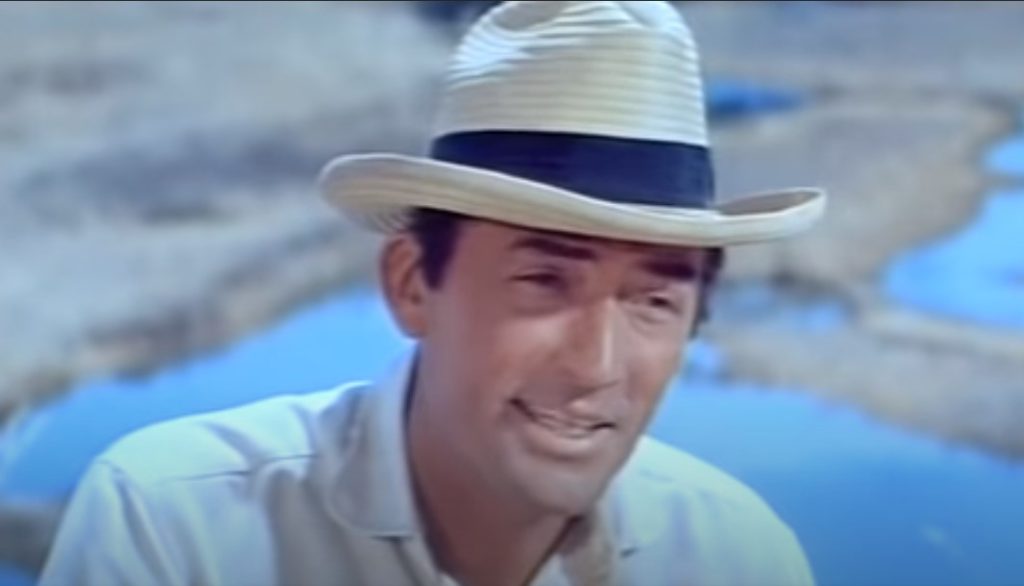
The Big Country is the epitome of “they don’t make ’em like they used to.” And Gregory Peck was “the Dude,” long before the Coen brothers came along.

I can’t think of a better way to lose yourself in a fictional world for close to three hours than to watch this 1958 classic western. It has a moral resonance and a textured ambiguity regarding right and wrong, alongside enough gunplay and cowboy hijinks to satisfy the most discerning connoisseur of the genre.

Peck, grave, even statesmanlike, in the role of James McKay, a former sea captain come west to woo Patty Terrill (Carroll Baker), has to remake himself to survive in the rough and tumble world of the feuding Terrills and Hannasseys. His survival and growth in this hostile environment holds our attention, occurring by fits and starts, unpredictably, yet convincingly.

There are many enjoyable supporting performances, not least of all Burl Ives as the Hannassey patriarch, and Charlton Heston as the Terrill foreman Steve Leech.

Something Wild

The blurb on the Criterion Channel says:
” A complex exploration of the physical and emotional effects of trauma, SOMETHING WILD stars Carroll Baker, in a layered performance, as a college student who attempts suicide after a brutal sexual assault but is stopped by a mechanic (Ralph Meeker)—whose kindness, however, soon takes an unsettling turn. Startlingly modern in its frankness and psychological realism, the film represents one of the purest on-screen expressions of the sensibility of the intimate community of artists around New York’s Actors Studio, which transformed American cinema in the mid-twentieth century. With astonishing location and claustrophobic interior photography by Eugene Schüfftan, an opening-title sequence by the inimitable Saul Bass, and a rhythmic score by Aaron Copland, Jack Garfein’s film is a masterwork of independent cinema. “

It’s not a bad synopsis. And it’s worth adding a line from the trailer, much of which overlays clips from the film with breathless hyperbole in a mod 60s font and plays up the sexually sensational elements. However when it says “Featuring the Fantastic City of New York,” there’s no hyperbole. NYC is a major player in the film; as a period piece, it’s almost painfully evocative of how the city used to be: beautiful and busy, yet also livable. Even the squalor of Mike’s apartment has a kind of bohemian charm.

This is one of those gems that I can’t imagine finding on any streaming service other than the Criterion Channel. I had never heard of the New York Actor’s Studio, but I will be seeking out other samples of the group’s work.

The Big Knife

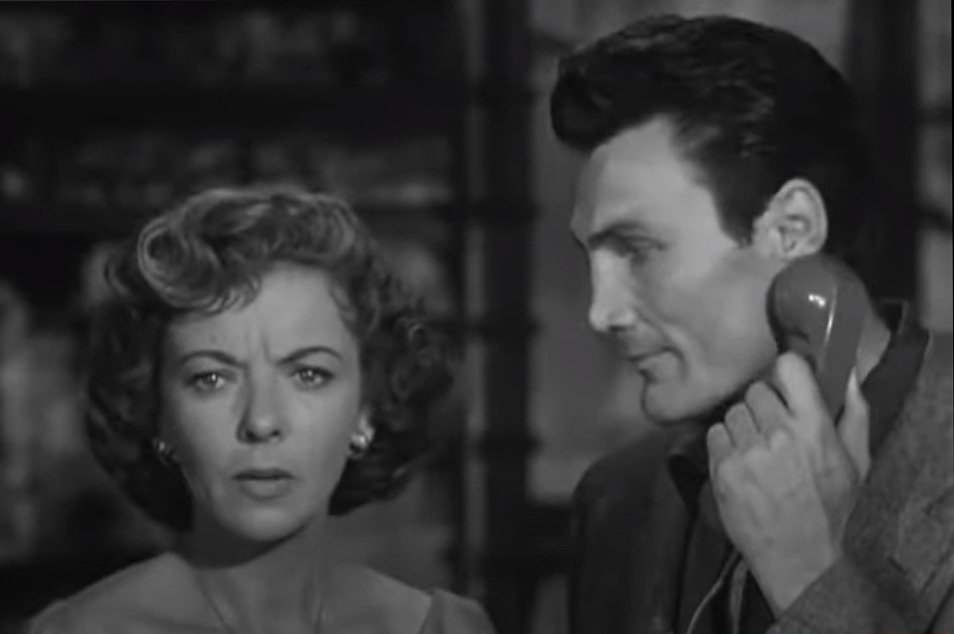
Ida Lupino and Jack Palance.

What a strange, baroque piece of film-making is this 1955 noir. Based on a play by Clifford Odets, The Big Knife wears its stage roots on its sleeve. Most of the action takes place in the Hollywood living room of Charlie Castle (Jack Palance), where Charlie, wife Marion (Ida Lupino), and Rod Steiger as malevolent movie studio boss Stanley Shriner Hoff, fight for survival like fish starved for air in a too-small fish bowl.

The movie revolves around Charlie’s moral dilemma. Misread by Hoff as a loutish hunk who can be blackmailed to serve the studio’s needs , Charlie is, we are supposed to believe, a subtle, tortured soul who longs to escape the bonds of his contrived Hollywood persona.

Charlie’s conflict with Hoff over his contract involves a lot of high-blown rhetoric which never really answers the question of why Charlie is so unwilling to continue being paid large sums of money for being a B movie actor, or what he would do otherwise.

An equally inexplicable conflict is the one between Charlie and wife Marion, who are nominally separated, but spend many long movie minutes talking and, in the process demonstrating that their connection is strong and true. Both stray, but with little enthusiasm for the act of adultery in general or for the partners they choose in particular.

The fact that the film is, essentially, “about” Charlie’s delicate moral sensibility makes it an interesting historical artifact, but Palance isn’t entirely convincing as the complex mix of contradictions that Odetts was apparently going for, instead relying on bursts of wild physicality and a portentuous delivery of his lines that, by making everything seem weighty, ultimately makes us incapable of taking anything very seriously.

Tuesday, After Christmas

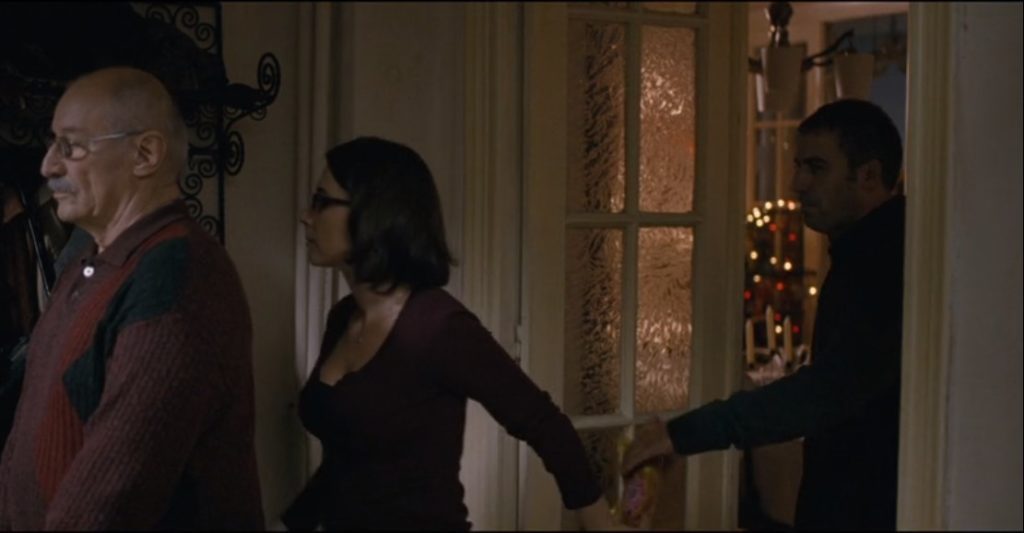
There is a meditative beauty in the extended shots in “Tuesday, After Christmas,” a lovely Romanian film about the dissolution of a marriage. One savors certain moments that crystallize emotional complexity, as when Adriana (Mirela Oprisor) reaches behind without looking to hand a Christmas present to her husband Paul (Mimi Branescu), the two still connected, if only by love for their daughter, following his betrayal.

These are fine wine, the shots that linger on the faces of Paul, Adriana, the mistress Raluca (Maria Popistasu), as compared with the fast food of American film, which is always racing forward without reflection, always about the movement, not the moment. What a lovely, restful surprise it is to be with these characters, their troubles notwithstanding.

Watched on Criterion Channel.

Blood on the Moon

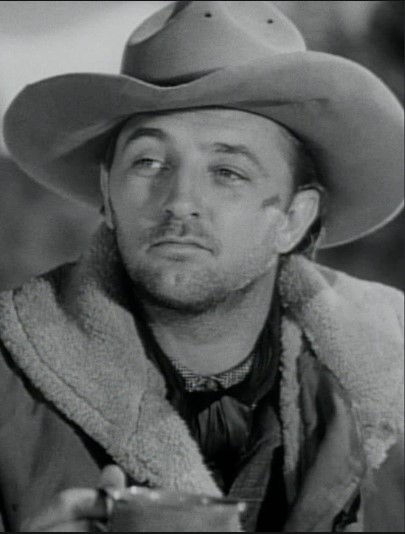
Watched another moving Western noir on Criterion … “Blood on the Moon,” based, apparently, on a novel by Luke Short. From 1948, it stars Robert Mitchum and Barbara Bel Gedes. I hadn’t realized Mitchum was considered, per Roger Ebert, “the soul of film noir.” He was persuasive in the morally complex role of Jim Garry. Overall, the film is a bit clunky, but I found ample compensation in its atmospherics and ingenuous devotion to the Western “mythology.” Bel Gedes is an earnest, attractive love interest.

Noir elements come out in the play of shadow, darkness, gloom and doom that pervade the fight scenes, and in the treacherous allegiances that Mitchum’s character must navigate.

First Reformed

Ethan Hawke stars in this film that masterfully connects the existential struggles of an individual (Hawke as Reverend Ernst Toller) with the global threat to human existence posed by climate change.

Toller, pastor of a small Dutch Reformed church in upstate New York, is asked by a young local woman, Mary (Amanda Seyfried), to counsel her husband Michael, whose radical environmental beliefs have led him into trouble before, and who now apparently contemplates martyrdom, as evidenced by the suicide vest Mary discovers in their garage.

While counseling Michael, Toller seems to find in these environmental concerns, with their disconnect between what we know to be right, and how we behave, a correlative to the disjunction in his own life between the model person that he wearily apes as a minister, and the alcoholic, lost man that he is in private.

A.O. Scott, writing his New York Times review of the film, incisively captures the underlying source of Toller’s anxiety:

“First Reformed” feels like a horror movie, which in some ways it is. The source of the terror, though, is not a supernatural presence but a metaphysical absence. A poem by Robert Lowell records an 18th-century preacher’s feeling that “the breath of God had carried out a planned and sensible withdrawal from this land,” leaving His creatures to their own infernal devices. Toller stares into the same abyss.

Toller’s internal struggles are accelerated by the impending Reconsecration of his church, which has become little more than a picturesque tourist stop, historically notable as a former stop on the Underground Railway, but spiritually irrelevant, and mostly devoid of parishoners on Sundays. The Reconsecration, led by Reverend Joel Jeffers (Cedric Kyles) of the nearby megachurch Abundant Life,  promises to cement the irrelevance of First Reformed by incorporating it into the swelling tide of evangelical meliorism.

Toller’s dying First Reformed church, set against the successful Abundant Life church, and the easy platitudes of Jeffers, is an obvious and telling contrast. Toller understands where the danger lies; prosperity, in this film, is a form of blindness, the evidence of Jesus’ teaching that it is easier for a camel to pass through the eye of a needle than for a rich man to enter the Kingdom of God.

But the deeper complexity, the one that Scott’s review alludes to, comes from the emptiness in modern life, the awareness that we have stepped into a secular abyss that no longer offers any possible solutions. During the scene in which Michael’s ashes are scattered, a choir of youthful climate activists chant tunelessly, excoriating “big oil.” The lyrics are as platitudinous as any of Jeffers’ reassurances. One feels clearly the loss of a transcendant aspect.

The basic question that Toller seems to be struggling with is whether man can know the mind of God. His genuine efforts to understand the answer to this question are undercut by the contemporary world, which has adopted what is essentially a human-centered religion, one which creates its own norms and values, and then attributes them to God.

In this world,  Edward Baiq (Michael Gaston) , the big oil executive who dismisses climate change as “complicated,” and erupts at Toller because he wants to take “political” stances, is the personification of the approach our society takes to quell those who would question materialism. In this camp, doubt is the greatest weakness, and greed, masked by the shiny trappings of worldly success, is the greatest good.

While Toller apparently finds an escape from his own personal hell in his relationship with Mary, there’s no comparable solution to the environmental destruction Michael foretold. As in Beatriz at Dinner, another powerful recent film with an environmental theme, self-immolation is shown as a tempting recourse for the protagonist; when society seems beyond reform, is the best option to give one’s life in an example of the ultimate resistance?

It

Stephen King’s interminable book, “It,” has been turned into an interminable movie, a film which accentuates the poverty of the idea behind this cliched coming-of-age story disguised as a faux horror story.

The essential problem with King’s killer clown conceit is that, without any larger resonance, it seems completely arbitrary. It might as well be a killer garbage man, or a killer hobo. Like so many aspects of this film, the trope of the cheery but creepy clown has been so played out that it serves only as an impotent signifier, without any real power to disturb, but which can cue a dulled audience to experience the simulacrum of unease.

The fear-inducing power of the clown in “It” relies largely upon the window dressing heaped upon it, in the form of special effects, frightening faces, haunted houses, scary noises, and physical violence. In addition, the movie focuses on the isolation of the Losers, putting them at odds with the group of intimidating older toughs, and setting them in a world of adults who are either inaccessible or cartoonishly malevolent, all while playing on the town’s documented history of missing children.

Drenching the story’s milieu in disquietude in order to amp up its scare factor is a common King technique, and while the film employs all the advantages of the visual media to create a mood of dread, in the end it has the same limited success as the book.

Part of the problem is that there is no real narrative tension. From the beginning, we already know that the clown is the bad guy. After that, what could be more boringly inevitable than the good (kids) vs. evil (clown) showdown in the haunted house? Everything that goes on between the clown’s first appearance and his (apparent) demise is just distraction, the filler required to turn a one-sentence premise into an overly long book and movie.

Just as boring is the theme of the misunderstood kids vs. the hostile adult world, another King favorite. Call it the “Stand By Me” meme. In the Losers, the story assembles a group of lovable outcasts, misfits, and nerds straight from central casting. From Bill, the stutterer, to Beverly, the pretty girl unjustly labeled a slut, the group checks off every box for heartwarmingly-awkward-kids-who-are-about-to-show-the-world-what-they-can-do, but fails to develop any one of these roles, save perhaps that of Beverly, beyond the level of caricature.