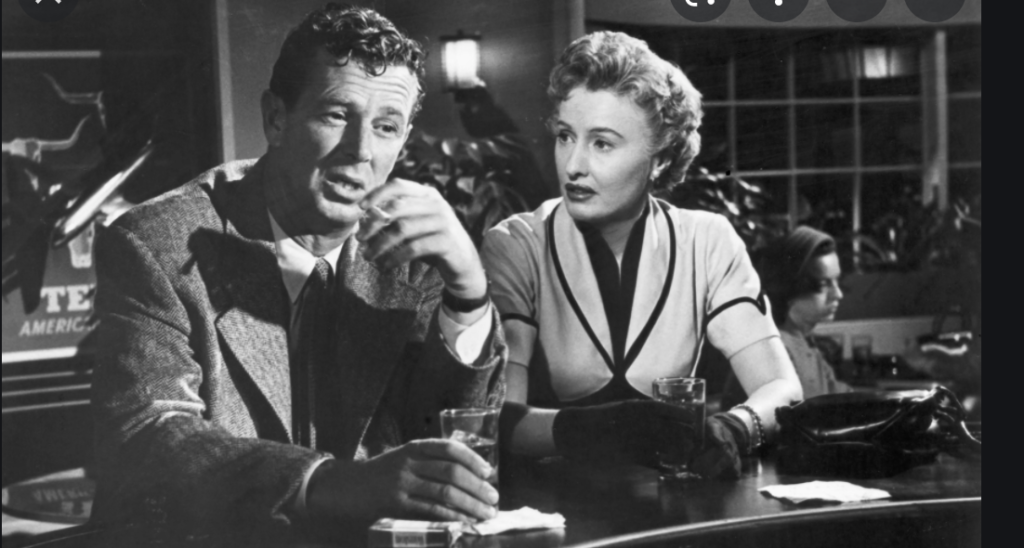
I recently watched Crime of Passion on Criterion and found it a really odd film. It’s amazing to me that it was made the year I was born. The whole environment of the film seems soooo long ago. I guess 1957 was a long time ago! The accepted roles of men and women, attitudes toward marriage and sex, dress, smoking, drinking, etc.
Of course all the stifling mores are just a setup to give Stanwyck’s rebellion meaning, but still, I imagine her behavior was probably more outside the norm than what she rebelled against.
More than anything, I was struck by the film’s lack of interiority. Probably there is a point in film history when movies began figuring out a way to gain access to the interior lives of their characters, and cared to do so. Maybe in the 60s? Or was it more an American thing to create plots that move characters around like puzzle pieces, sometimes without a rationale that is really consistent or apparent to the viewer? I’m thinking for example of Stanwyck’s character’s initial views on marriage, followed by the quick turnaround in marrying Hayden’s character. Or the decision to murder Burr’s character. The latter act seemed not only out of character, but apparently resulted from a jumble of motives, none of which made sense to me without more access to her character’s inner workings.